Wedgewood Powell Ohio Neighborhoods: 5 Areas to Know
August 13, 2026
August 13, 2026
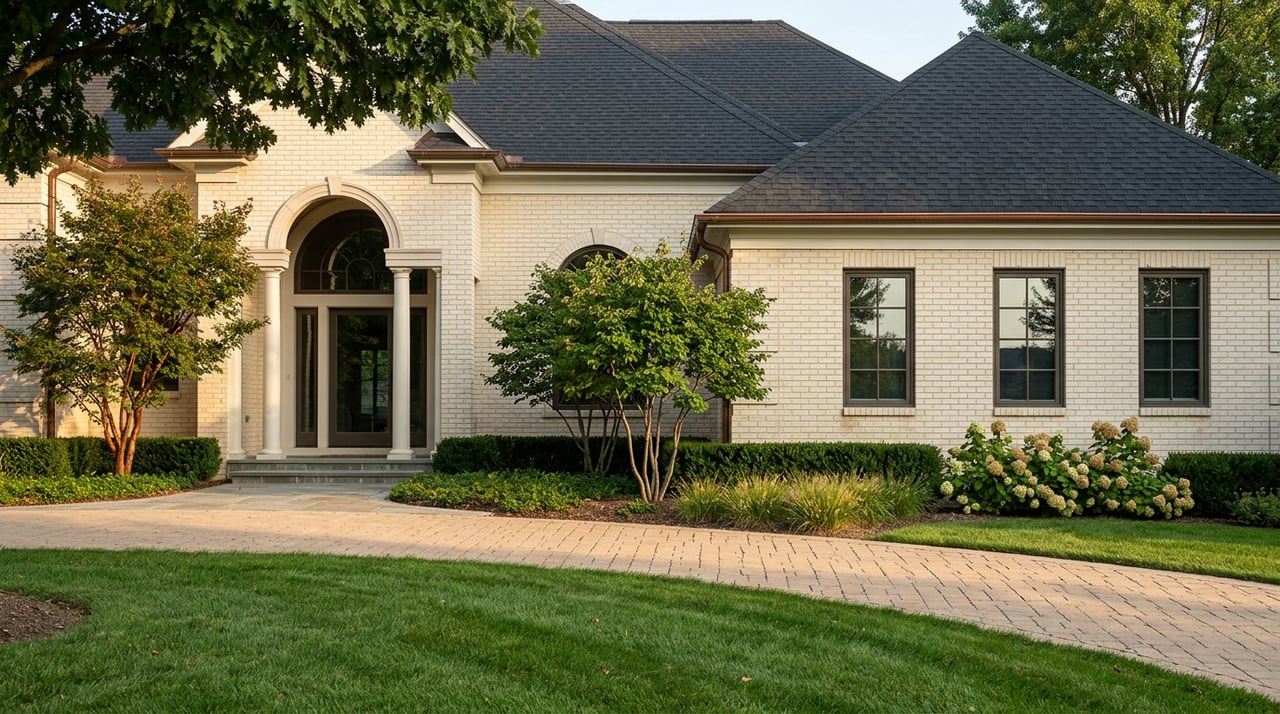
Search "Wedgewood Powell Ohio" and the listing photos all look like variations on the same theme: mature tree canopy, a fairway in the background, a driveway wide enough for three cars. What the photos will not tell you is which county you are buying into, which school district your kids will attend, or whether the home two doors down closed for $650,000 or $1.35 million. The name on the sign is carrying far less information than most buyers assume it is.
That gap matters more in Powell than in most Central Ohio suburbs, because Powell's best-known addresses are built around a handful of golf-course brands, and those brands do not map cleanly onto a single subdivision, a single price band, or even a single county. If you are pricing a purchase off the city-wide median, or off a subdivision name someone mentioned on a tour, you are working from the wrong map.
"Wedgewood" as most agents and builders use the term actually refers to five separate communities: Wedgewood, Wedgewood Park, Wedgewood Park Estates, Wedgewood Hills, and Wedgewood Glen. Three of them sit in Liberty Township, Delaware County, and feed into Olentangy Local Schools. The other two, Wedgewood Hills and Wedgewood Glen, sit across the county line in Franklin County and are zoned for Dublin City Schools. Two different counties, two different school systems, one marketing name that gets used interchangeably for all five.
Even on the Olentangy side, the feeder pattern is not uniform. Wedgewood Park, which runs along the Scioto River corridor with 13 acres of common green space, sends students to Indian Springs Elementary, Hyatts Middle, and Liberty High School, which is a different elementary and middle school assignment than the original Wedgewood neighborhood carries a few streets over.
Two homes facing each other across a street in this area can sit in different counties, pay property taxes under different local structures, and send their children to different school systems entirely. That is not a hypothetical scenario built to make a point. It is how the boundary actually runs, and it is the kind of detail that shows up during a mortgage application or a school enrollment call, not on a listing sheet.
Here is what the sales data shows for the two communities where 2025 figures were broken out individually:
| Community | County & School District | 2025 Closed Sales Range | 2025 Average Sale Price |
|---|---|---|---|
| Wedgewood | Delaware County, Olentangy Local Schools | $605,000 to $1,450,000 | approximately $1,038,000 |
| Wedgewood Park | Delaware County, Olentangy Local Schools | $789,500 to $1,265,000 | approximately $892,000 |
Wedgewood Hills, on the Franklin County side, is the smallest and most tucked-away of the five, built as 83 custom homes on gently rolling, wooded lots with a shared pond and a walking path. Wedgewood Glen sits alongside it, also in Franklin County and also zoned for Dublin City Schools. Wedgewood Park Estates rounds out the group on the Delaware County side of the line, alongside Wedgewood Park. Sales in these three smaller pockets were not broken out separately in the reporting available, which is itself a useful reminder: even the data sources that track Powell closely do not always split "Wedgewood" the way the county line actually splits it.
Zoom out to the city level and a similar pattern shows up in how the numbers get reported versus what they mean. In Q1 2026, 106 residential sales closed in Powell's 43065 zip code, split between 86 single-family homes and 20 condos. The single-family median sold price came in at $594,835, while the average was $656,773. That roughly $62,000 gap between median and average is not noise. It reflects a handful of sales above $1 million, the kind Wedgewood and its neighboring golf communities regularly produce, pulling the average well above where most transactions in the market actually land.
Days on market tells a similar story if you do not check the calendar behind it. The single-family median for Q1 2026 was 79 days, compared with a 10-day median across all of 2025. Read alone, that looks like a market that suddenly cooled. It is not. Nearly 40% of the quarter's single-family closings had carried days on market above 90, which points to listings that sat through the slow winter months and finally closed in January through March, not a sudden shift in buyer appetite. March alone produced 41 single-family closings, more than January and February combined, which is the market waking up as spring listings hit, not a market losing steam.
The condo segment inside the same zip code moved differently again. Twenty condos closed in Q1 2026 at a median of $436,500, up 9% from the full-year 2025 median of $400,500, but only 30% sold at or above list price, with a median sale-to-list ratio of 98.49%. Buyers in that segment closed roughly 2.4% under asking on average, a negotiating cushion that single-family sellers in Powell simply did not offer during the same quarter.
Mortgage rates help explain part of why the pressure lands unevenly. Freddie Mac's weekly survey put the 30-year fixed rate at 6.69% as of August 6, 2026, up slightly from the week before and higher than the same week a year earlier. A quarter-point move in that rate changes the monthly math meaningfully for a buyer financing a $436,500 condo. It barely registers for a buyer writing an offer on a $1.35 million Wedgewood resale, where financing structure and buyer profile look very different. Same zip code, same rate environment, two different reactions.
Wedgewood is the clearest example because its county line happens to run through the middle of it, but the underlying pattern, one brand name covering several distinct products, repeats across Powell's other golf-adjacent communities:
None of these communities is better than another. The point is that the brand name tells you the marketing category, not the specific street, price tier, or school assignment. Powell's luxury market broadly starts around $850,000 to $900,000 and the most active segment in 2026 runs $900,000 to $1.3 million, but "luxury Powell" spans acreage lots in Scioto Highlands, club memberships in Kinsale, and walkable historic-district homes that never touch a fairway. Pricing a purchase or a listing off any single one of those categories, or off the city-wide median, means pricing off the wrong comparable set.
If you are shopping by subdivision name, the name is a starting point, not an answer. Before you write an offer or set a listing price, check the specific parcel against the county line and the school district boundary rather than assuming the neighborhood name settles it. Powell's most concentrated buyer activity tends to run from late winter through early summer, which means the pricing and negotiating dynamics you see in a spring search will differ from what a fall listing sees, even within the same subdivision.
The reliable comparisons in Powell are street-level, not brand-level. A home in Wedgewood Park prices differently than a comparable square footage two streets over in Wedgewood Hills, not because one is better, but because they sit in different counties, feed different schools, and have historically sold in different ranges. Treating them as interchangeable because they share a name is where buyers and sellers both lose ground at the negotiating table.
Michael Bradley Gibson and the team at Gibson Group track these distinctions block by block across Powell, Westerville, and Worthington. If you are comparing specific streets rather than subdivision names, talk with a local agent before you tour.
Is Wedgewood in Powell part of Delaware County or Franklin County? Both. Wedgewood, Wedgewood Park, and Wedgewood Park Estates sit in Liberty Township, Delaware County, and feed Olentangy Local Schools. Wedgewood Hills and Wedgewood Glen sit across the line in Franklin County and are zoned for Dublin City Schools.
Why did Powell's days-on-market number jump so much in early 2026? The Q1 2026 median of 79 days reflects listings that went active during the slower fall and winter months and closed once spring buyer activity picked up, rather than a genuine slowdown in demand. March 2026 alone produced more single-family closings than January and February combined.
Do condos in Powell sell differently than single-family homes? Yes. In Q1 2026, condos closed at a median sale-to-list ratio of 98.49%, with only 30% selling at or above list price, while single-family homes closed at essentially 100% of list price with half selling at or above asking.
This article is general information, not legal, tax or financial advice. Consult a qualified professional about your situation.
Stay up to date on the latest real estate trends.
Work with a dedicated team committed to delivering exceptional results. We provide trusted guidance, clear communication, and a tailored experience from start to finish.
GIBSON GRP
545 Metro Pl S, #100 Dublin, OH 43017 REAL