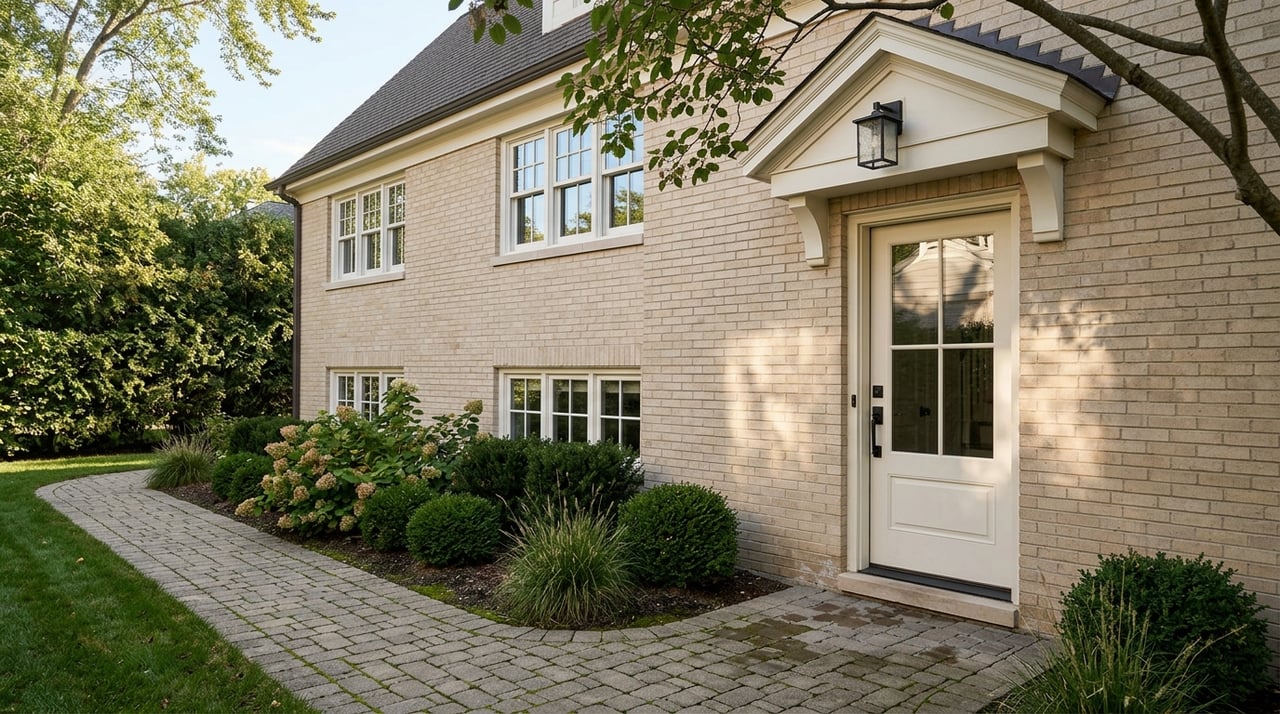
House Hacking a Worthington Duplex: What to Know
July 9, 2026
July 9, 2026
Wondering if house hacking in Worthington can actually work in a market where prices, taxes, and low inventory are already top concerns? If you want to lower your monthly housing cost without leaving one of central Ohio’s most established suburbs, this strategy can be worth a closer look. The key is knowing what is realistic in Worthington, what may need city review, and which property types fit the local housing stock. Let’s dive in.
House hacking is simply buying a home you live in and using part of it to generate rental income. In Worthington, that often means renting a spare bedroom, buying a legal duplex or triplex, or choosing another owner-occupied setup that follows local rules.
That local context matters. Worthington’s 2024 housing materials show a median home sales price of $420,000 in 2023, with 78% owner-occupied housing and 19% rental housing. The same materials also show an older housing stock, with a median year built of 1964 and 70% of homes built before 1970.
For many buyers, that makes house hacking less about trendy real estate tactics and more about long-term affordability. In a market where survey respondents identified price, taxes, and low inventory as major concerns, offsetting part of your payment can create more flexibility.
Worthington is not a market where every property can easily be converted into multiple rentable spaces. The city’s housing needs assessment notes that Worthington does not allow accessory dwelling units, and the city has a 30-day minimum stay requirement for all rentals. That means this is not a strong short-term rental or ADU play.
Instead, the most practical strategies tend to be straightforward and owner-occupied. These are the options that best match Worthington’s housing stock and code framework.
The simplest version is renting out a bedroom in a single-family home while you live there too. This can help you offset your mortgage without changing the home into a separate unit.
This option can make sense in Worthington because single-unit detached homes dominate the local housing stock. The city’s housing needs assessment reported that about 80% of structures in 2021 were 1-unit detached homes.
If you are considering this route, keep in mind that lender treatment of roommate income can depend on documentation. At a high level, documented rental income from roommates or boarders in a single-family primary residence may be usable in underwriting if it appears on a tax return.
A small multifamily property is the classic house-hack setup. You live in one unit and rent the others.
This can be a strong fit for buyers who want more separation between their living space and rental space. It can also create a clearer rental structure than sharing a single-family house with a roommate.
The challenge in Worthington is supply. The city’s housing assessment shows small multifamily stock is limited, with roughly 5% of structures being 3- or 4-unit buildings and about 3% being 5- to 9-unit buildings.
Some buyers look at older homes and see an opportunity to add a second kitchen, separate entrance, or internal layout change. In Worthington, that can be more complicated than it first appears.
The city notes that zoning variances, a Certificate of Appropriateness, a Conditional Use Permit, or other review may apply depending on the parcel and the scope of work. In other words, a house that looks flexible on paper may not be simple to alter legally.
One of the biggest mistakes buyers make is assuming a property can be used the way they want because the layout seems right. In Worthington, parcel-level rules matter.
The city’s zoning map includes a mix of districts such as R-6.5 One and Two Family Residence, R-10 and R-16 residential districts, and AR-4.5 and AR-3 apartment districts. The city directs owners to check GIS first, then review Chapter 1147 for permitted and conditional uses and Chapter 1149 for setbacks.
That means two nearby properties may have very different options. Before you build your plan around rental income, confirm the zoning and ask whether any planned changes would trigger additional review.
Financing is one reason house hacking appeals to first-time and move-up buyers. If you are buying a home as your primary residence, you may have access to owner-occupied loan options that are more flexible than pure investment financing.
A common example is FHA financing. HUD states that FHA loans can be used on 1- to 4-unit properties, are limited to owner-occupied principal residences, and may allow a down payment as low as 3.5%.
Conventional financing can also work for some house-hack purchases. At a high level, rental income from a 2- to 4-unit primary residence may be used in qualifying, with documentation such as leases and tax returns often playing a major role.
The key point is not to treat financing as one-size-fits-all. In a single-family house hack, the main question is often whether roommate or boarder payments are documented well enough to count. In a small multifamily purchase, the focus is usually on how rental income is projected and underwritten.
Worthington’s older housing stock is part of its appeal, but it can also affect your budget. With 37% of units built before 1950 and 70% built before 1970, repair and update costs may deserve extra attention.
That does not mean older homes are poor candidates. It does mean you should look closely at systems, layout, maintenance needs, and whether any changes you want to make are realistic under current code and permit requirements.
If your strategy depends on reworking the home, make sure you understand the full cost before you buy. What looks like a bargain upfront can feel very different after permits, contractor bids, and renovation timelines.
If you house hack, you are not just a homeowner. You are also taking on landlord responsibilities.
Ohio law requires landlords to keep premises habitable, maintain common areas, and keep electrical, plumbing, sanitary, heating, ventilating, and air-conditioning systems in good working order. For buildings with four or more units, trash receptacles are also required.
Security deposits are regulated too. Ohio law requires an itemized written notice of deductions within 30 days after termination and delivery of possession, and deposits above $50 or one month’s rent can earn 5% interest if the tenant remains in possession for at least six months.
Ohio also prohibits retaliation when a tenant complains about code violations or landlord duties. Even if you live on-site, the rented portion of the property still comes with legal obligations.
In this market, the strongest house-hack plans are usually the simplest ones. They are built around legal use, realistic rental income, and a property that works for you even if the numbers are a little tighter than expected.
A practical approach often looks like this:
In Worthington, house hacking works best as a steady, owner-occupied affordability strategy. It is less about chasing quick rental trends and more about making a high-cost, low-inventory market more manageable over time.
If you want help evaluating a duplex, a multifamily opportunity, or a single-family home that could work for a roommate setup, talk with Michael Bradley Gibson about what makes sense in Worthington and the broader Columbus market.
Stay up to date on the latest real estate trends.
Work with a dedicated team committed to delivering exceptional results. We provide trusted guidance, clear communication, and a tailored experience from start to finish.
GIBSON GRP
545 Metro Pl S, #100 Dublin, OH 43017 REAL