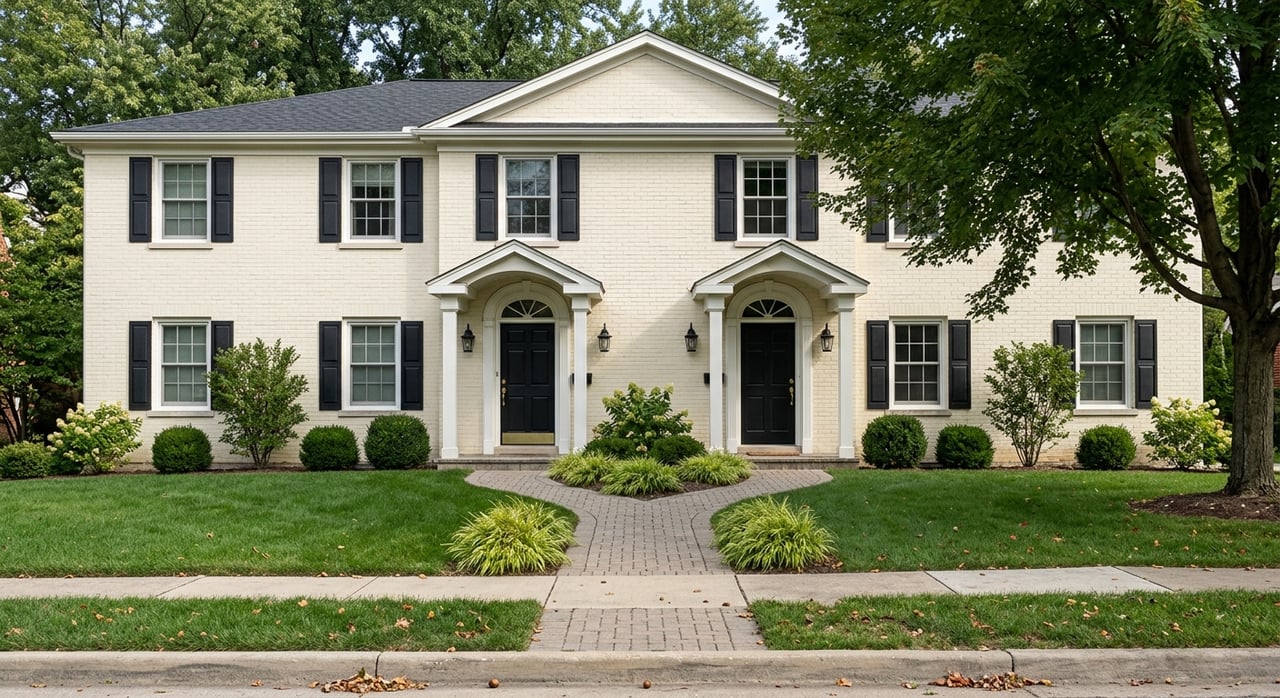
Westerville Rental Market Overview for Small Investors
June 11, 2026
June 11, 2026
If you are looking for a suburban rental market that feels steadier than flashy, Westerville deserves a closer look. For small investors, the challenge is not just finding a property. It is figuring out whether today’s rent, vacancy, age of housing stock, and local rules support a workable buy-and-hold plan. This snapshot will help you understand what the numbers suggest, where the risks may sit, and how to think about underwriting in Westerville. Let’s dive in.
Westerville is an owner-heavy suburb, which shapes how the rental market behaves. Census QuickFacts reports 38,165 residents, a 72.5% owner-occupied housing unit rate, a median household income of $109,404, a median owner-occupied home value of $374,500, and a median gross rent of $1,364.
For you as a small investor, that mix can be appealing and challenging at the same time. A market with strong owner occupancy can point to neighborhood stability, but it can also mean fewer rental opportunities and higher acquisition costs. In other words, Westerville may offer steadier demand, yet the margin for error on your purchase price matters.
The age profile also stands out. About 22.6% of residents are under 18, and 21.5% are age 65 or older, which suggests demand can come from a range of household types, including families, downsizers, and renters who want a suburban setting without buying right now.
One of the most important signals in Westerville is renter affordability pressure. The city’s housing study found that 65.5% of renters were cost burdened and 22.9% were severely cost burdened.
That does not automatically mean rent levels are low. It means many renter households may be sensitive to monthly payment changes. For your underwriting, that can affect renewal strategy, vacancy assumptions, and how much rent growth you can realistically expect to push without increasing turnover.
This is why a conservative approach makes sense here. A unit may lease, but that does not mean every rent increase will be friction-free. Stable occupancy often comes from pricing with discipline, not just aiming for the highest possible number.
Westerville is still dominated by single-family housing. The city study found that 82.7% of homes are single-family residences, 4% are in 2 to 4 unit buildings, and 13% are in buildings with 5 or more units.
That said, the rental market is not made up only of large apartment communities. Among rented homes, 51.6% are in 5+ unit structures and 34.7% are single-unit rentals. That means detached homes remain part of the rental landscape, even in a market where apartments carry a large share of renter occupancy.
For a small investor, this creates a few possible lanes:
The city’s study also showed interest in more housing variety. It found that 56.9% of residents agreed Westerville needs a greater variety of housing types and prices, while 73% said more smaller houses, cottages, or townhomes on smaller lots are needed. Looking ahead, the city’s preferred future housing scenario calls for 4,190 new residential units by 2035, with 70% attached units and 30% single-family units.
For you, that is a useful market signal. If you are evaluating attached product or smaller-format housing, you are looking at a segment that fits the city’s broader housing conversation.
Westerville’s housing stock appears older than many investors expect. The city study said nearly 75% of homes were built between 1960 and 1999, and it described the average Westerville home as a 3 to 4 bedroom single-family structure that is about 50 years old and owner-occupied.
Point2Homes also found that the largest renter-occupied age cohort is in homes built in the 1970s, followed by the 2010s and 1980s. That matters because older inventory can require a different reserve strategy than newer product.
If you are buying a home that was previously owner-occupied and converting it to a rental, your repair and replacement budget should be realistic. Systems, finishes, common wear items, and deferred maintenance can all affect returns. In a market like Westerville, old does not mean bad, but it does mean you should inspect closely and underwrite carefully.
Current rent data should be treated as a range, not a single fixed number. Different platforms track different slices of the market, and that is especially important in a city with a mix of apartments, detached homes, and other housing types.
Apartments.com reported a June 2026 average apartment rent of $1,341 per month. It broke that down as follows:
Zillow’s Westerville rental page showed an all-property average rent of $1,843 per month, with a stated range of $975 to $3,450, and noted that Westerville rents were down $357 year over year.
The Census benchmark sits closer to the apartment data, with median gross rent at $1,364. Taken together, these figures suggest Westerville is better described as a mid-to-upper suburban rent market, rather than an entry-level low-cost rental market.
Point2Homes listed a 5.7% rental vacancy rate as of March 2026. That is not a sign of an obviously oversupplied market, but it also does not suggest zero friction.
For you, this means you should not assume instant leasing at top-of-range rent. A mid-single-digit vacancy environment can still support healthy operations, but it is wise to underwrite some downtime, make-ready expense, and a reasonable leasing window.
Because this figure comes from market-intelligence data rather than a city-run vacancy survey, current comp checks still matter. Before closing, it is smart to compare active listings, recent asking rents, and how your property type fits the current inventory.
In Westerville, conservative underwriting is not just a cautious habit. It is a practical response to the market’s mix of owner-heavy housing, affordability pressure among renters, and older homes.
A workable projection should include:
This approach can help you avoid a common mistake in suburban rental investing: buying based on best-case rent while ignoring the carrying cost of an older property. If the deal only works with aggressive assumptions, it may not be the right fit.
Westerville has local requirements that matter for small investors and accidental landlords. City code requires owners of residential rental property to file owner contact information, along with the property’s street address and permanent parcel number, with the Building Official.
If you are a nonresident owner, the city also requires you to designate an in-state statutory agent for service of process. That is an operational detail many first-time or out-of-area investors should factor in early.
The city also states that leasing real or tangible property is a taxable business activity that must be reported, and Westerville’s income tax rate is 2.0%. That is an underwriting item, not an afterthought, especially if you are purchasing through an LLC or another investment structure.
At the state level, Ohio landlord-tenant law sets the operating baseline. Landlords must comply with applicable building, housing, health, and safety codes, keep the premises fit and habitable, maintain common areas and building systems, and generally give tenants reasonable notice before entry except in emergencies.
Ohio law also requires the standard three-day notice language before a forcible entry and detainer action. If you are building your first Westerville rental plan, understanding these rules before closing can save time and reduce surprises later.
Westerville may be a solid fit if you want a suburban buy-and-hold market with moderate rents, mid-single-digit vacancy, and a housing stock that includes both detached homes and larger rental buildings. It may be less attractive if you need a low acquisition cost market or if your strategy depends on aggressive rent jumps to make the numbers work.
The biggest opportunity here is stability. The biggest risk is assuming stability means simplicity. In Westerville, purchase price discipline, realistic reserves, and local compliance work are what help turn a decent-looking property into a durable investment.
If you are weighing a single-family rental, a townhome, or a small multifamily opportunity in Westerville, local context matters. Working through the numbers with neighborhood-level insight can help you spot the difference between a property that looks acceptable on paper and one that truly fits your goals. If you want help evaluating opportunities in Westerville or the broader Columbus area, talk with Michael Bradley Gibson.
Stay up to date on the latest real estate trends.
Work with a dedicated team committed to delivering exceptional results. We provide trusted guidance, clear communication, and a tailored experience from start to finish.
GIBSON GRP
545 Metro Pl S, #100 Dublin, OH 43017 REAL