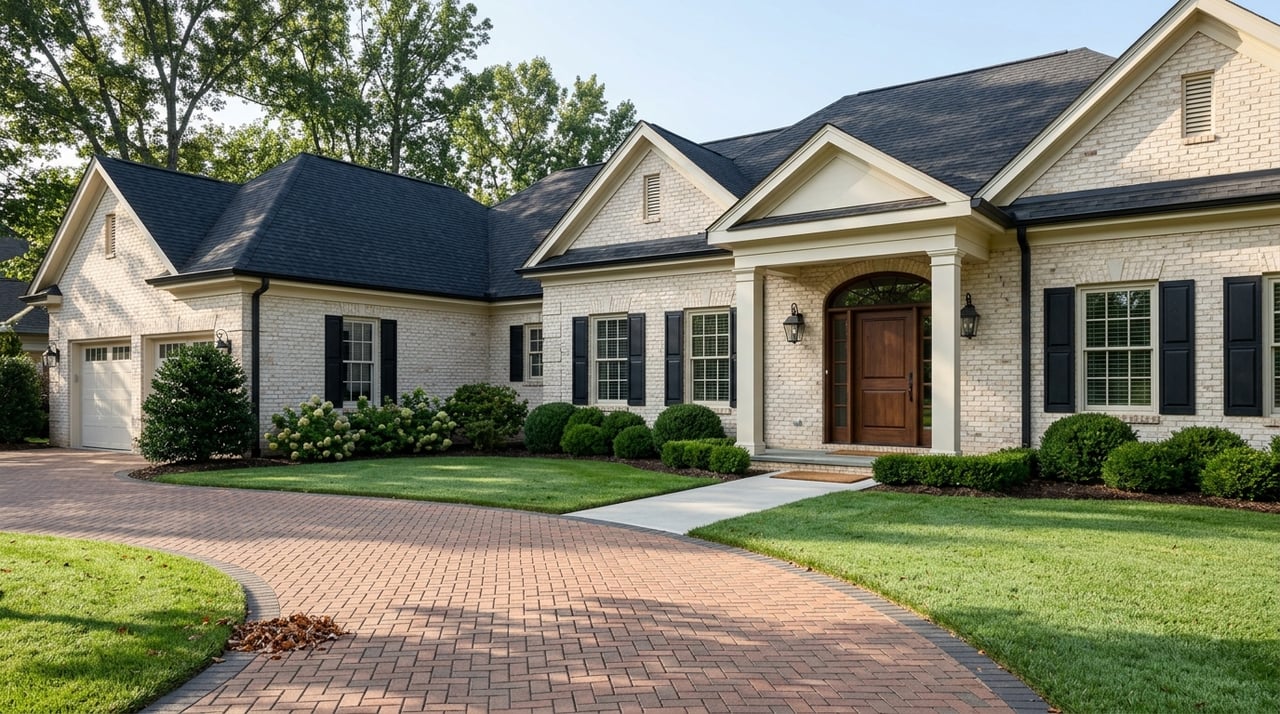
Commuting From Powell to Columbus for Today’s Homebuyers
May 14, 2026
May 14, 2026
If you’re thinking about buying in Powell, the commute question is probably near the top of your list. You want enough space and neighborhood convenience to enjoy daily life, but you also need to know what getting to Columbus will really feel like on a workday. The good news is that Powell offers practical access to major job centers across the metro, with a few important caveats around routes and traffic patterns. Let’s dive in.
Powell functions largely as a commuter suburb. According to Census QuickFacts, the mean travel time to work is 24.3 minutes, which lines up with the experience many buyers expect from a suburb connected to the Columbus metro.
City planning and economic development materials make that pattern even clearer. Powell reports that 97% of its residents work outside the city, while 93% of jobs in Powell are held by people who live elsewhere. In simple terms, most people who live in Powell leave the city for work each day, and that makes commuting part of everyday life here.
For homebuyers, that matters because commuting is not an edge case in Powell. It is a normal part of how many households use the city, which is one reason commute planning should be part of your home search from the start.
A Powell address can put you within reasonable driving distance of several major employment areas. Still, the number you see on a map is only part of the story, especially during the morning and evening rush.
Powell to downtown Columbus is about 18 miles and roughly 24 minutes in typical traffic, with nonstop driving around 23 minutes. For many buyers, that puts downtown within realistic daily commuting range.
If you work standard office hours, though, you should expect that timing to move around based on your exact starting point in Powell and the route you take into the city. A commute that looks simple on paper can feel different once traffic builds near key connectors.
Dublin is one of the easiest nearby job centers to reach from Powell. The drive is about 7 miles and around 13 minutes, which helps explain why Powell often appeals to buyers working on the northwest side of the metro.
If your office is in or near Dublin, Powell may offer a strong balance between daily convenience and residential lifestyle. That is especially true if you want suburban space without being too far from work.
A route-planner estimate from Ohio State University to Powell shows about 13.5 miles and 18 minutes by car. That makes the University District another reasonable destination for many Powell residents.
As always, the exact total depends on which part of campus or the surrounding district you need to reach. Parking, campus access points, and time of day can all shift the real-world experience.
Powell to John Glenn Columbus International Airport is about 29 minutes by car. If you travel regularly for work or commute to airport-area employment, that is useful context.
It is not the shortest trip on this list, but it is still manageable for many buyers who want a suburban home base. The key is being realistic about how often you will make that drive and at what times.
Official city materials describe Polaris Fashion Place and Easton Town Center as short drives from Powell, though they do not assign one fixed minute estimate. It is best to think of these as north-side and northeast-side employment corridors with drive times that vary based on your address and traffic conditions.
If you work near Polaris or Easton, route testing matters more than broad assumptions. Two homes in Powell can create noticeably different drive patterns depending on how quickly you can access the roads you need.
One of the biggest mistakes buyers make is focusing only on distance. In Powell, the better question is often: Which roads will you actually use every day?
SR 750, also known as Powell Road, is the main east-west street through downtown Powell. City materials tied to the 2024 railroad crossing closure showed how important the larger route network is, with detours relying on Sawmill Parkway, I-270, and SR 315.
Powell’s comprehensive plan also notes that east-west travel in and around the city is limited by river crossings and the CSX rail line. It specifically identifies congestion in downtown Powell, especially on SR 750, as a major concern.
That means a home that looks close to your office on a map may still feel less convenient if your route depends on a known bottleneck. For many buyers, shaving stress off the daily drive is just as important as shaving minutes.
As you narrow down neighborhoods or streets, pay close attention to how a home connects to the regional road network. In Powell, these roads often shape the commute experience:
A home with easier access to your most-used road may be a better fit than one that is technically closer in miles. This is especially true if you expect to drive during peak hours most weekdays.
If you are hoping to rely on public transit for a daily commute, Powell is not the easiest fit. Current COTA service includes 39 fixed-route lines and three on-demand zones, but Powell is not one of the COTA//Plus on-demand service areas.
There are north-side transit options in the broader Columbus area, including Line 102 and CMAX, but those routes serve Columbus corridors rather than Powell itself. Powell’s long-standing pattern, based on city planning context, is that it remains a transit-light suburb.
For most buyers, the practical takeaway is simple: expect to commute by car unless you have a very specific work arrangement, stop-based bus option, or employer-supported transportation setup. If transit access is a top priority, you will want to evaluate that early in your search.
Commute planning is only one side of the decision. Powell continues to attract buyers because it offers a suburban feel that still stays connected to the larger metro.
The city reports 114 acres of parkland and 29 miles of interconnecting bike trails. Residents can walk or bike to historic downtown Powell from nearby parks, and downtown includes free parking and ongoing revitalization efforts that support a walkable local experience.
For many buyers, that is the tradeoff that makes Powell worth a closer look. You may accept a manageable drive in exchange for more space, park access, and a small-town downtown feel that still keeps Columbus within reach.
The smartest way to judge Powell for your lifestyle is to test your real routine, not just a map estimate. A little planning now can help you avoid surprises after closing.
If possible, drive from the neighborhood to your workplace during the same hours you would normally leave and return. Morning and evening traffic can change the feel of a route more than expected.
A trip that seems easy at midday may be very different during peak traffic. This is especially important if your route depends on downtown Powell or east-west travel corridors.
Do not stop at the fastest route shown in an app. In Powell, alternate paths can matter because congestion, limited crossings, and local bottlenecks can affect reliability.
A route that is one or two minutes longer on paper may feel much easier in everyday use. Consistency often matters more than chasing the absolute shortest estimate.
Think about how often you actually commute. If you go downtown once or twice a week, your threshold may be very different from someone driving five days a week to the same office.
You should also think about flexibility. Hybrid work, airport travel, and frequent meetings in different parts of Columbus can all change which Powell location makes the most sense.
Commute time is important, but it should not be the only factor. A home that gives you better access to parks, downtown Powell, or the roads you use most may offer stronger day-to-day value than a home chosen on drive time alone.
The goal is not to find a perfect commute. It is to find the right overall fit for how you want to live.
If you want help comparing Powell neighborhoods through the lens of your actual commute, home goals, and budget, reach out to Michael Bradley Gibson for practical local guidance.
Stay up to date on the latest real estate trends.
Work with a dedicated team committed to delivering exceptional results. We provide trusted guidance, clear communication, and a tailored experience from start to finish.

GIBSON GRP
545 Metro Pl S, #100 Dublin, OH 43017 REAL