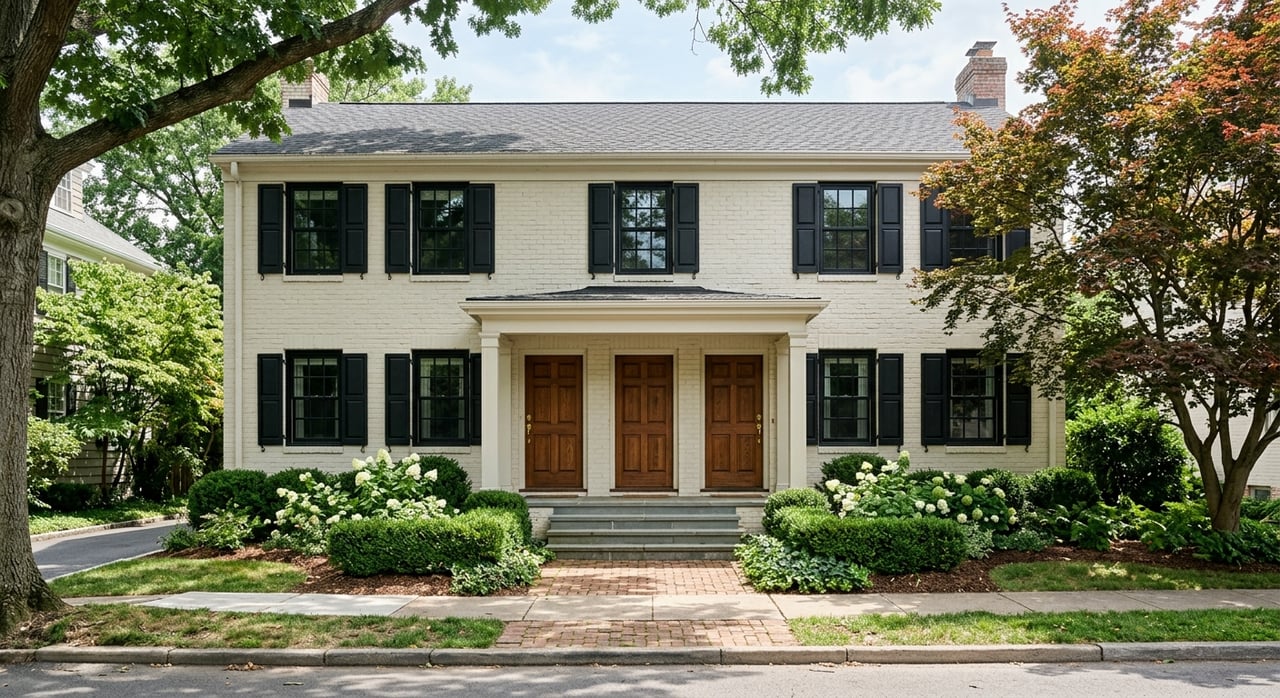
Worthington Ohio Multifamily Investment Opportunities
April 16, 2026
April 16, 2026
If you are looking for a small multifamily investment in Worthington, you are not shopping in a high-volume market. You are looking in a suburb where supply is limited, vacancy is tight, and available duplexes or small apartment buildings can be hard to find. That can make deal flow slower, but it can also create long-term upside for patient investors. Let’s dive in.
Worthington offers the kind of fundamentals many buy-and-hold investors want. According to the U.S. Census QuickFacts for Worthington, the city has an estimated 2024 population of 14,649, an 82.6% owner-occupied housing rate, a median household income of $127,382, and a median gross rent of $1,232.
Those numbers point to a stable housing base, not a market driven by heavy turnover. The same Census profile also shows strong educational attainment and a demographic mix that includes both households with children and older residents, which supports the case for steady rental demand over time.
One of the biggest themes in Worthington is scarcity. The city’s market profile shows a mature housing stock with a median year built of 1961, 64% of homes built more than 50 years ago, only 2% of units built after 1999, and just 6% of units located in large apartment complexes or high-rise buildings.
That matters because small multifamily opportunities do not come to market in large numbers. Worthington also has a very low housing vacancy rate of 2%, which reinforces the idea that this is a tight, built-out market where rental inventory tends to stay absorbed.
The city’s housing assessment adds more context. Housing stock grew only 2% from 2000 to 2010 and 3% from 2010 to 2020, and the city notes there is not enough land under current zoning to build the roughly 2,000 units needed to meet estimated demand. For investors, that usually means opportunity comes through existing scattered-site assets rather than a wave of new development.
Pricing in Worthington can surprise investors who are used to outer-suburb numbers. Recent examples in the research show a 2-unit property at 1163-1165 Eastfield Rd sold for $378,000 in April 2025, 1141 Eastfield Rd sold for $600,000 in June 2022, a four-unit building at 493 Pittsfield Dr sold for $510,000 in June 2023, and a larger multifamily property at 161 E Granville Rd sold for $850,000 in July 2023.
That creates a wide pricing band. In practical terms, small multifamily properties in Worthington can trade from the high $300,000s to the mid or upper $800,000s, depending on the number of units, building condition, renovation level, and overall utility of the site.
At the same time, Worthington is competitive more broadly. Redfin’s market snapshot referenced in the research describes Worthington as a very competitive market, with a February 2026 median sale price of $540,000, average days on market of 70, and a 97.2% sale-to-list ratio. That does not mean every multifamily asset will move the same way, but it does support the idea that buyers should be ready when the right property appears.
Worthington is not a low-rent suburb, and that helps support small multifamily investing. Realtor.com rental data in the research shows a median apartment rental price of $2,095, with only three active apartment listings and an average of 21 days on market.
The rent picture becomes more useful when you break it down by unit type. Rentometer’s Worthington averages show average rents of $1,440 for 2-bedroom units and $2,334 for 3-bedroom units. The research also notes current 3-bedroom examples ranging from $1,690 to $2,650, which suggests a meaningful spread between older or more basic units and renovated or higher-end options.
For underwriting, that supports a simple working framework:
These are starting points, not guarantees. In a low-supply market like Worthington, accurate underwriting matters more than broad assumptions.
Worthington’s appeal is rooted in stability. The city combines high owner occupancy, established neighborhoods, and strong local fundamentals that can attract renters looking for a long-term fit rather than a short-term stop.
The local school district is often part of that demand story. According to Worthington City Schools, the district serves about 10,700 students across 21 schools and programs and offers AP and IB options. For investors, that kind of district profile can support household demand from renters who want access to the area but are not buying yet.
Based on the demographic data in the Census report, Worthington’s renter pool may include professionals, households seeking more space before a purchase, and downsizers looking for lower-maintenance living. While each property will appeal to a different renter profile, the broader demand picture supports neighborhood-scale rentals that are well maintained and thoughtfully updated.
If you are evaluating Worthington as a buy-and-hold play, the long-term signals are encouraging. The city’s housing assessment says rental vacancy has been 3.6%, below a healthy 5% benchmark, and that absorption of new units is positive.
That same report shows asking rent rose from $889 in 2013 to $1,335 in 2023, while remaining about 17% higher than the surrounding area. This is an important point for investors. The data suggests steady rent growth, not dramatic spikes.
The broader market profile also reports an annual appreciation rate since 2010 of 4.1%, placing the city in the top 20% nationally. Put together, the numbers suggest a market better suited to durable cash flow and appreciation than quick speculation.
Worthington has a strong story, but it is not a market where you want to stretch your assumptions. Older housing stock means maintenance and capital reserves matter. With a median year built of 1961 and a large share of homes more than 50 years old, repair planning should be part of every acquisition model.
Acquisition prices also matter. Strong rents do not automatically create easy cash flow if you overpay or underestimate renovation costs. In many cases, the best results in Worthington may come from conservative underwriting, selective upgrades, and a long hold period.
A few practical items to review before you move forward:
The clearest investing angle in Worthington is not scale. It is scarcity. This looks more like a market for patient investors who want a small number of quality units in an established suburb with tight vacancy and stable demand.
That can make Worthington a strong fit if you are looking for:
If you are chasing large inventory volume or aggressive short-term repositioning, Worthington may feel tight. If you are focused on durable holds in a constrained market, it deserves a serious look.
When you are ready to evaluate opportunities in Worthington or compare them with other Columbus-area submarkets, connecting with Michael Bradley Gibson can help you pressure-test pricing, rental assumptions, and the fit of a deal for your long-term goals.
Stay up to date on the latest real estate trends.
Work with a dedicated team committed to delivering exceptional results. We provide trusted guidance, clear communication, and a tailored experience from start to finish.
GIBSON GRP
545 Metro Pl S, #100 Dublin, OH 43017 REAL